
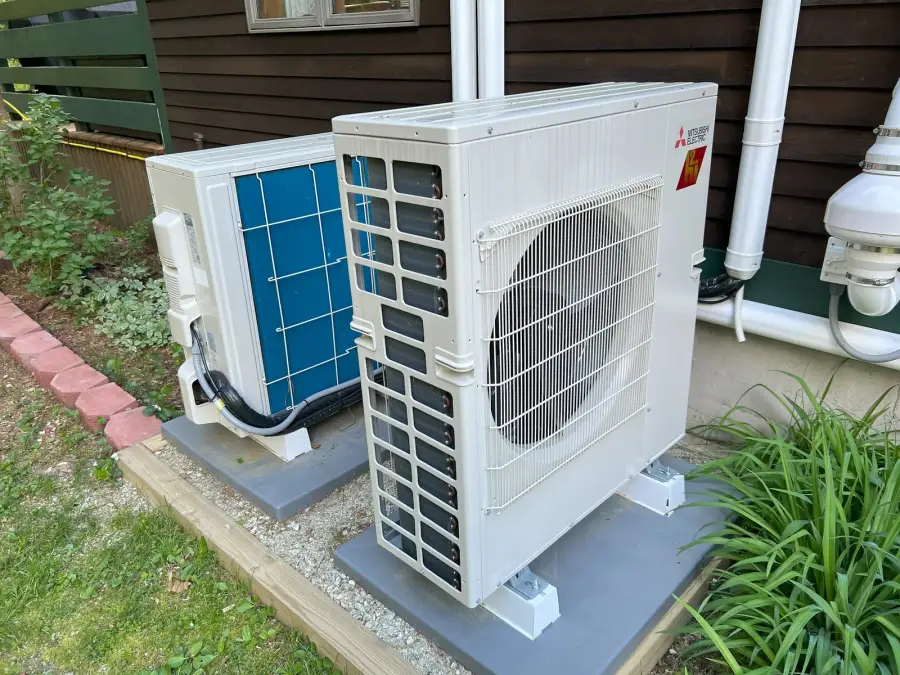
A heat pump can raise your electric bill because it has moved some or all of your heating energy use to electricity. If the increase is higher than you expected, start with auxiliary heat, thermostat settings, airflow, outdoor conditions, and the charges on your utility bill. Those clues will tell you whether the system is responding normally to winter or whether its setup, condition, or sizing needs attention.
Is auxiliary heat adding to your electricity use?
Many ducted heat pumps have electric resistance auxiliary heat. Some ductless systems also operate alongside a separate backup heater. Resistance heat can be useful when the heat pump needs help, but it uses substantially more electricity than normal compressor operation. If it runs for long periods, the increase can show up quickly in your monthly usage.
Check the thermostat or controller for an auxiliary or emergency heat indicator. Emergency heat is usually a manual setting that bypasses the heat pump, while auxiliary heat is controlled automatically. Do not leave emergency heat on unless a technician has told you to use it. A system that frequently calls for auxiliary heat may have a controls issue, restricted airflow, or a capacity mismatch.
The U.S. Department of Energy explains how coordinated controls prioritize the heat pump and bring in secondary heat when needed in its homeowner guide to heat pumps with secondary heating. The right control sequence depends on the equipment and the backup source.
Could thermostat habits be triggering backup heat?
A large temperature setback can make the house call for heat faster than the heat pump alone can supply it. On some systems, that demand brings on auxiliary heat. Frequent manual changes can also make a variable-speed system work against a moving target instead of settling into an efficient operating pattern.
A steady setting is often a better starting point, but follow the control strategy recommended for your exact system. If a programmed schedule appears to coincide with higher usage, note when the auxiliary indicator appears and ask a technician to review the setup. Avoid changing installer settings or switchover controls without understanding what they do.
Is airflow restricted anywhere in the system?
A dirty filter, closed supply registers, blocked returns, or debris around the outdoor unit can reduce heat transfer. The system then runs longer to deliver the same comfort. Start with the simple checks: install the correct clean filter, keep accessible returns and supplies open, and clear leaves or snow away from the outdoor unit without damaging the coil.
Brief defrost cycles and steam from the outdoor unit can be normal in cold, humid weather. Persistent ice, repeated shutdowns, unusual noise, or rooms that never reach the set temperature deserve a professional inspection. Do not chip ice from the unit or open electrical panels.
Are weather and utility charges changing the comparison?
Colder weather requires more heating even when your thermostat stays unchanged. Compare usage, not just the total bill, and look at the same billing period across years when possible. Also check whether your supply price or delivery charges changed. An electric bill combines energy use with rates and fixed charges, so a higher total does not always mean the heat pump used dramatically more electricity.
Eversource explains how colder weather and energy supply affect bills in its guide to high electric bills. Unitil customers can review current supply and delivery information on the Unitil rates page.
Was the system selected and sized for your home?
Equipment selection matters as much as the words heat pump on the proposal. A system needs enough heating capacity for the house at local winter conditions, suitable controls, and ductwork or indoor units that can deliver the required airflow. An undersized system may rely on backup heat too often. An oversized system can cycle in ways that hurt comfort and make operation harder to evaluate.
The NEEP cold-climate heat pump product list provides model-specific performance information for cold-climate equipment. Your proposal and load calculation should identify the actual equipment being considered, not just a generic system size. Our Manual J sizing guide explains what that calculation should include.
Are you comparing total heating costs fairly?
If you replaced oil or propane heat, your electric bill may rise while your delivered fuel bill falls. Compare the combined cost of electricity and any remaining heating fuel, using similar weather periods where possible. Include the cooling season separately, since a heat pump may have added air conditioning that your old heating system did not provide.
Your utility usage history can help isolate the change. Our oil to heat pump comparison shows how to think about delivered heat, electricity use, and fuel costs without treating one bill as the whole picture.
When should you ask for heat pump service?
Request a diagnosis when auxiliary heat runs constantly, the system cannot hold a reasonable temperature, airflow is weak after basic filter checks, ice keeps building up, or usage rises without a matching change in weather or rates. Bring your recent bills, note when the problem occurs, and record any thermostat messages. That information helps separate a controls or airflow problem from normal seasonal operation.
For more about this work, see our Heat Pump Installation in southern NH page or request a free estimate.
Dana Borriello: Dana Borriello founded Service One Heating and Cooling in 2013 and still runs service calls across southern New Hampshire. He writes here about the questions homeowners actually ask on the truck.